


Chevy Blazer or Blazer EV: Which Is Right for You?
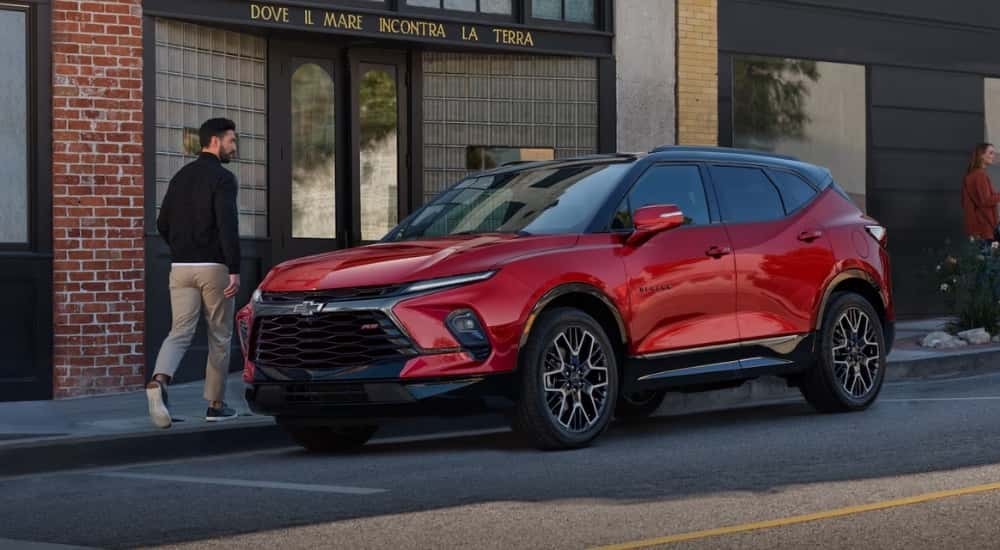
When shopping for a vehicle, there’s no definitive answer to the question of which Chevy model is right for you—it all comes down to what you need. As you start looking for a Chevy Blazer for sale, it’s a good idea to consider both the standard Blazer with its conventional engine and the Blazer EV with its all-electric battery and motor system. These are both fantastic midsize SUVs with remarkable features inside and out, providing you with a vehicle that you’ll love driving each day. Aside from the obvious differences in their powertrains, there are also some notable differences in the features they offer and how much room you get inside each of them. Let’s take a closer look at them and see if we can figure out which one is right for you.
2025 Chevy Blazer––Engines and Performance
Let’s start off by talking about the performance of these two vehicles because this is arguably the most significant difference between them. The Chevy Blazer is a conventional vehicle with an internal combustion engine, though you have two different engines available. Standard for the 2025 Blazer is a 2.0L turbocharged I-4 engine that provides 228 hp and 258 lb-ft of torque, which is plenty of power for a midsize SUV like this. It’s paired with a nine-speed automatic transmission, and you get standard front-wheel drive (FWD), though all-wheel drive (AWD) is available if you like the enhanced traction it provides.
For boosted performance, there’s an available 3.6L V6 engine for the Blazer, which delivers an impressive 308 hp and 270 lb-ft of torque. This is paired with the same transmission and also offered with either FWD or AWD, so you can get this enhanced power along with the drive type you prefer. Both of these engines make the Blazer a lot of fun to drive, and they’re beautifully suited to a midsize SUV like this. The right one simply depends on the kind of performance you want from your vehicle—unless you’re interested in all-electric capabilities.
2025 Chevy Blazer EV––Battery and Motor Options
If you’d like to experience the feeling of electrified performance, then that’s where the 2025 Chevy Blazer EV comes into play. This model features a number of motors powered by an electric battery system without the conventional engine of the standard Blazer. You have numerous options here, starting with an 85-kWh battery and either a single motor or a pair of motors. Single-motor Blazer EV models with this battery give you FWD and provide 220 hp and 243 lb-ft of torque, which is pretty comparable to the standard engine for the Blazer. If you go with this battery and a model with two motors—one on each axle for electric AWD, then you get 300 hp and 355 lb-ft of torque, which makes the Blazer EV incredibly fun to drive.
The Blazer EV takes things even further, however, by giving you two more options for enhanced performance. There’s a 102-kWh battery available that puts out much more power; with a single motor, you get a Blazer EV with rear-wheel drive along with 365 hp and 325 lb-ft of torque, which feels incredible. You’ll only find this on the RS model, so keep that in mind when considering different options. For something truly incredible, there’s an exclusive SS trim featuring the 102-kWh battery and a pair of motors that provide 615 hp and 650 lb-ft of torque, making your midsize SUV feel like driving a sports car!
Fuel Efficiency vs All-Electric Range and Charging
Now that you have a feel for the kind of performance you can get with these vehicles, we should talk about efficiency with them. There are differences in the experience you get with a conventional engine compared to an EV, but we can still check out what they offer. The 2025 Blazer, with its standard engine and FWD, gets an estimated 22 MPG in the city and 29 MPG on the highway, with about 485 miles of total driving range. If you go with the available V6 engine and FWD, then you get an estimated 19 MPG in the city and 26 MPG on the highway with about 427 miles of range; these numbers go down slightly if you choose an AWD model.
With the Chevy Blazer EV, we’re interested in the kind of range you can get from a full charge, which depends on the combination of battery and motors you go with. The standard 85-kWh battery and a single motor get an estimated 312 miles of range from a full charge; if you go with a dual-motor model, this battery gets you about 283 miles of range instead. For optimal range, the 102-kWh battery and a single motor provide an estimated 334 miles of range from a full charge, which is the best the Blazer EV has to offer. This lets you go a long time between stops and makes it easy to take care of everything you need each day and then recharge overnight.
Blazer Interior Features and Options
Beyond performance, you’ll also find some key differences between these two vehicles regarding what you get inside them, so let’s briefly take a look at what that means. The 2025 Chevy Blazer has two rows of seating inside for up to five passengers; you get about 40 inches of headroom and 41 inches of legroom up front, with a little over 38 inches of headroom and nearly 40 inches of legroom in the back. In the rear of the Blazer, you’ll find just over 30 cu.ft. of cargo volume, with more than 64 cu.ft. of total cargo space behind the front seats.
Standard features in the 2025 Blazer LT include a 10.2-inch Infotainment system with support for wireless Apple CarPlay and Android Auto, paired with a 4.2-inch color Driver Information Center display. You get a six-speaker sound system, premium cloth seating, heated front seats with an eight-way power driver’s seat, and dual-zone climate control, all standard. If you go up to the top-tier Premium trim, then you get a larger eight-inch Driver Information Center, an eight-speaker Bose Premium sound system, leather-appointed seating, and more.
Blazer EV Interior Features and Options
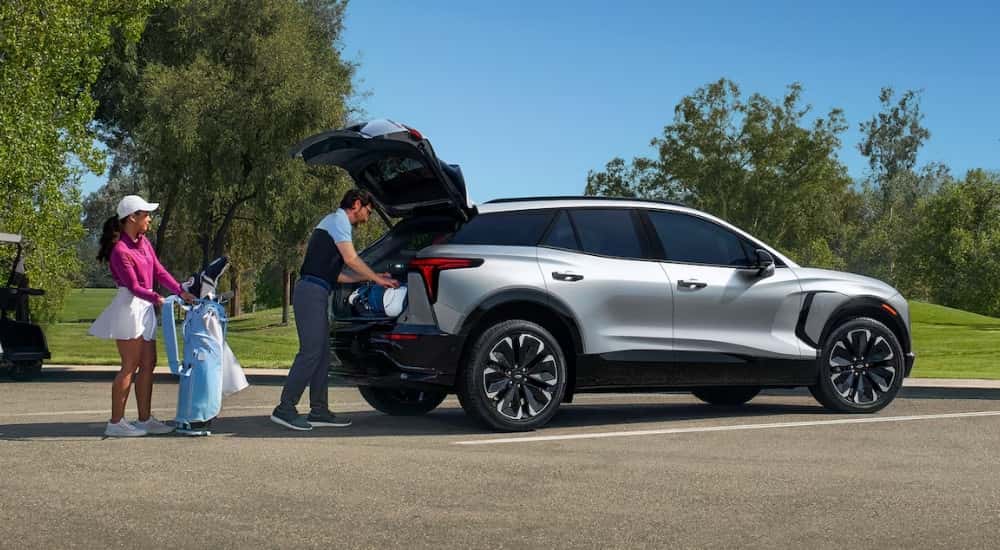
Although the 2025 Blazer EV is also a midsize SUV with two rows of seating inside for five passengers, there are some notable differences in size between it and the standard Blazer. You get almost 41 inches of headroom and more than 44 inches of legroom up front in the Blazer EV, with more than 38 inches of headroom and nearly 39 inches of legroom in the back. The Blazer EV has just over 25 cu.ft. of rear cargo volume to utilize, with just under 60 cu.ft. of total cargo space behind the front seats—this is a bit less cargo room than the standard Blazer.
Looking inside the standard Blazer EV LT model, you get a gorgeous 17.7-inch Infotainment screen up front with Google built-in, which is massive. This is joined by a standard 11-inch Driver Information Center and a six-speaker sound system, plus Adaptive Cruise Control and much more. Looking at the high-end RS trim, you get a number of enhancements, such as perforated suede/Evotex seating, an eight-way power driver’s seat, heated and ventilated front seats, a wireless phone charger, and more upgrades. All of this comes together beautifully, though there’s no denying the large displays are the focal point for many drivers.
Find the Perfect Chevy to Meet Your Needs
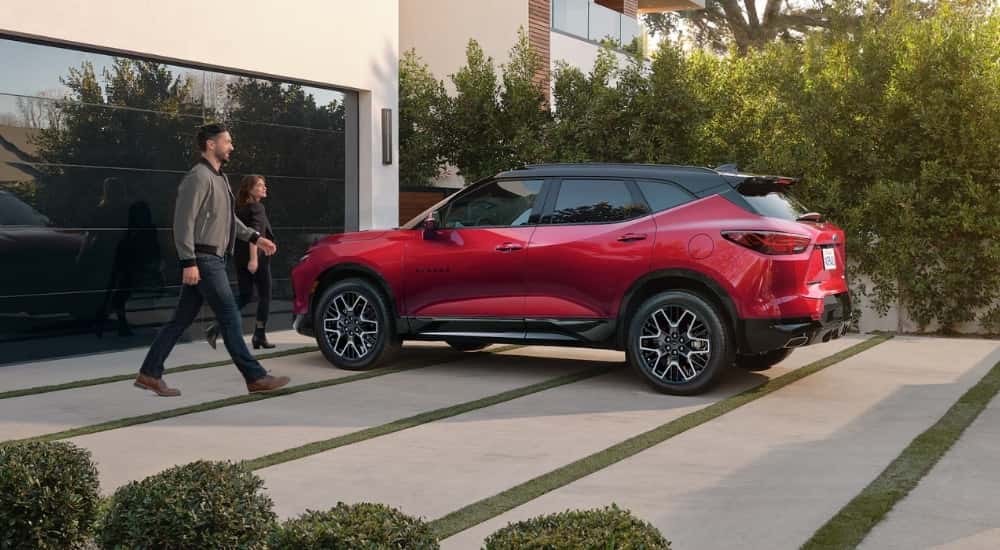
Both of these vehicles have incredible features and options available, giving you a remarkable midsize SUV that you’ll love driving each day. The large interior of the Blazer gives you more cargo space to utilize than the Blazer EV, but you get advanced tech features in the all-electric model that are hard to beat. Your decision, however, should likely come down to whether you want a conventional vehicle or you want to enjoy all-electric performance and if you can take full advantage of conveniences like charging at home. We should also note, finally, that the 2025 Blazer starts at about $35,000 MSRP, while the Blazer EV starts at just over $44,000 MSRP—that might also be a deciding factor for you.[a] If you’re still not sure which model will best meet your needs, then we’re here at Parks Chevrolet Huntersville to help you figure it all out.
0 comment(s) so far on Chevy Blazer or Blazer EV: Which Is Right for You?